Sunday, January 09, 2011

January 2011: One Seed Chicago: Radish Love

"We've got this thing that's called Radish Love
We're growing veggies in the soil: Radish Love"

As an avid reader, I'm a big fan of the One Book, One Chicago program. This program from the Chicago Public Library "seeks to cultivate a culture of reading in our city by reinforcing the importance and fun of reading and highlighting the benefits of reading together as a community." People can participate at whatever level makes them happy, from simply reading the selected book to joining in discussion groups. At best, the shared reading experience engages readers in conversation and a sense of community, and at worst people have read a great book that they might not have read otherwise.
There is another opportunity for fun, learning, and shared experience: One Seed Chicago. One Seed Chicago is a project of NeighborSpace, the land trust that has made community gardening possible all across the city. The goal of One Seed Chicago is to engage gardeners and inspire new gardeners by providing seeds for a plant that we can all grow together, in our home gardens, on our balconies, in our community garden plots. In other words, to cultivate a culture - of gardening.

In 2010 three candidate plants--bee balm, nodding onion, and coneflower, all Illinois natives--were put to a vote. I voted for, and lobbied for, nodding onion, in honor of the connection between Chicago and the stinky oniony leek plant that gave it its name. The bee balm won despite my best efforts but that's okay; bee balm is a fantastic plant!
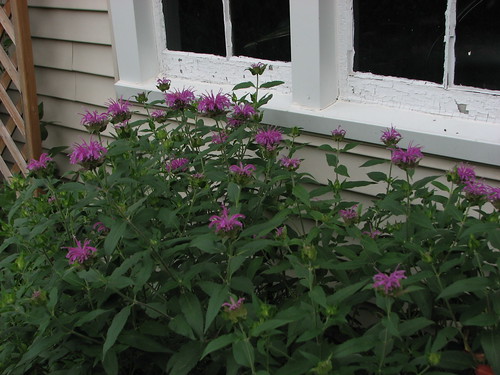
IMG_5870
This year the candidates are edible plants: radish, eggplant, and Swiss chard. Eggplants and chard are undeniably beautiful plants, but I voted for radishes and I encourage you to as well!

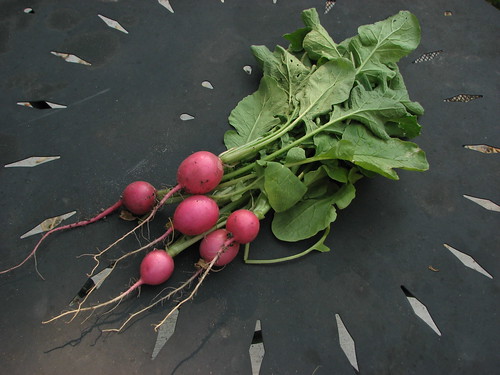
Why radishes? Well, because they taste awesome, crispy and peppery. Pull them from the soil, rinse them, and eat them. For greens lovers, the greens are edible, too. Why else? They're so easy! Last year my husband and I built a raised garden and grew food for the first time.
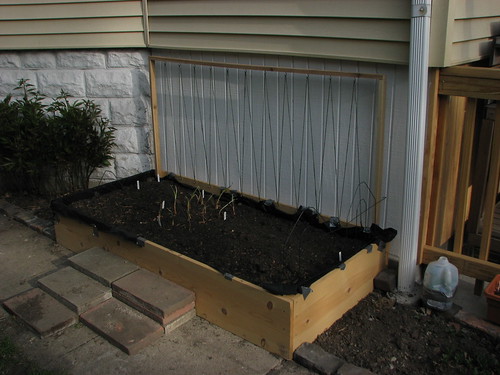
IMG_5153
It was not 100% successful (I'm looking at you, green peppers!) but the radishes made me feel like a gardening rock star and their success convinced me to keep trying with other plants. Radishes grow fast, they taste great, and they're so easy even a kid, or a distracted grad student, can grow them. Talk about a great gateway plant for a fledgling gardener. Plus, if you're like me and don't like to cook, radishes are edible right from the ground. And they're pretty!
IMG_5461 
Imagine a whole city growing the same plant and reading the same book. We can't agree on a baseball team or whether Rahm Emanuel is a Chicago resident, but we can unite in these two activities and improve ourselves in the process.

So go, vote RADISH now!

Wednesday, October 20, 2010

October: Autumn in the Lurie Garden

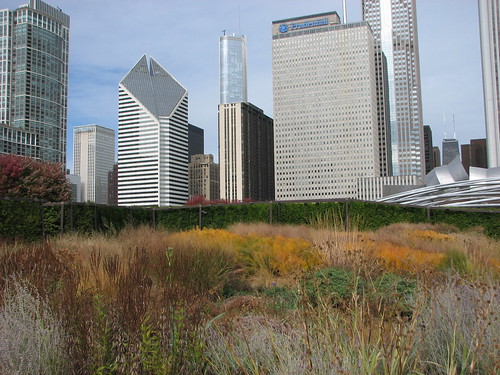
I spent today running errands and doing some botany work at the Field Museum. Since it was such a gorgeous day, I dawdled a bit in between and visited the Lurie Garden. I think it's the first time I've seen it in autumn. It's pretty amazing how the garden changes throughout the year; just a few months ago it was the most vivid river of purple salvia imaginable, and now it's all soft gold and green.

The iconic Lurie shot; I wonder how many times have I taken this picture?
IMG_7380

Since construction of the Art Institute's Modern Wing, this has become the other "iconic shot." That's Amsonia hubrechtii glowing like fire in the middle.
IMG_7393

Looking west towards the Michigan Avenue streetwall. I love how each maple is turning red from south to north.
IMG_7376

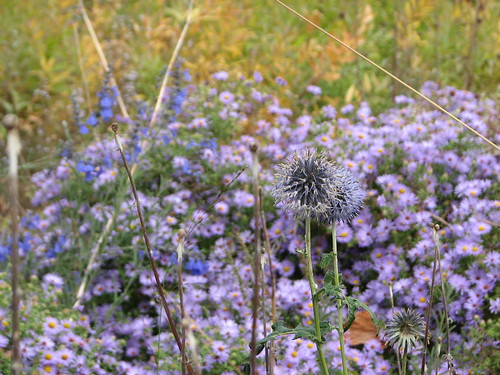
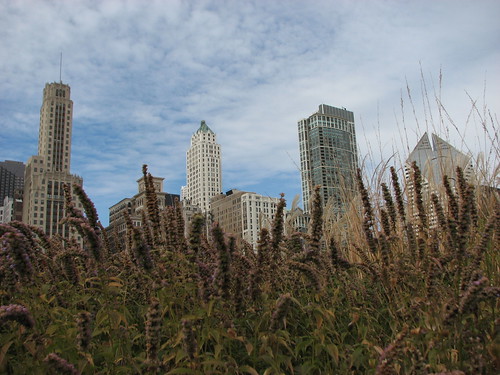
Chicago blues: asters and something (delphiniums?) in the background, echinops going to seed in the foreground.
IMG_7370

Northern sea oats, Chasmanthium latifolium
IMG_7353

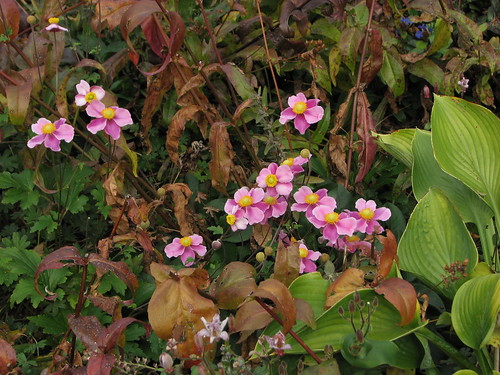
Japanese anemones glowing amongst the fading foliage
IMG_7351

To envision a city on a prairie, you just need the proper perspective.
IMG_7357

Monday, October 18, 2010

October: Birthday Junior, plus one

It's been a long time since I've posted about, or acquired, any houseplants. I took a several-month hiatus from collecting, cooing over, photographing, and in some cases watering, the juniors, and am just now starting to regain interest in their cute little lives. I did however work up the energy to buy two plants recently...

Vriesea hieroglyphica, my birthday present to myself (and $20 off, thanks to Groupon)
IMG_7322
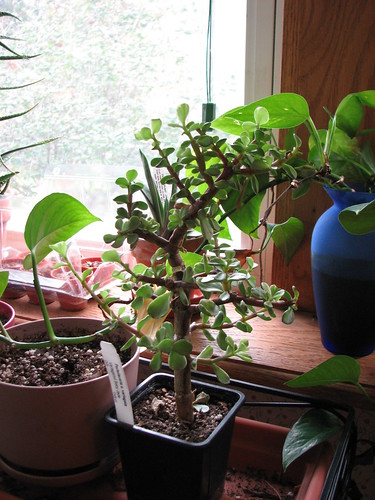
and Portulacaria afra 'Variegata', purchased from a vendor at the Chicago Botanic Garden's bonsai show.
IMG_7324
I don't know if I will maintain its horizontal branched form or just let it go wild. I certainly do not have the patience for full-on bonsai action, as evidenced by the collection of empty bonsai pots in my basement.

I put some of the houseplants outside for the first time this year. Usually, indoor plants stay indoors, outdoor plants stay outside, and never the twain shall meet. I mixed it up this year, overwintering a hibiscus and then putting some things out in the summer. Lesson learned: even morning sun is BAD. I nearly lost my treasured night-blooming cereus and another cactus to sunburn. On the other hand, the desert rose thrived and bloomed in the sun (until the wind knocked it off the table; now it sort of....curves) and the yucca put on a bunch of new growth. Trial and error, I suppose, but I'm going to be very reluctant to put anything outside next year.

Saturday, October 09, 2010

October: Aster-kissing

Asters, asters, everywhere! Next Thursday I will try to get pictures of the carpets of asters in bloom at the Morton Arboretum. I am also working up the nerve to rehome some asters growing wild on a vacant lot down the street. In the meantime, I will just enjoy the ones in my own yard...

I was told this is heartleaf aster (Symphyotrichum cordifolium) but the leaves are more like arrowleaf aster (S. urophyllum). Whatever it is, I was also told it belongs in shade. I'm thinking that's not entirely correct since this is all it's accomplished in two years.
IMG_7251
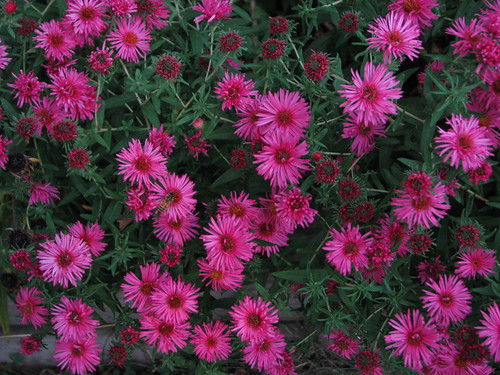
A fuschia S. novae-angliae passalong...
IMG_7283
...and a purple one my grandma gave me.
IMG_7297
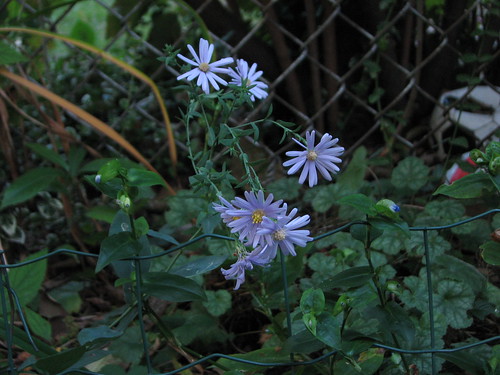
The sky blue asters, S. oolentangiense, always look like lovely lavender clouds.
IMG_7245
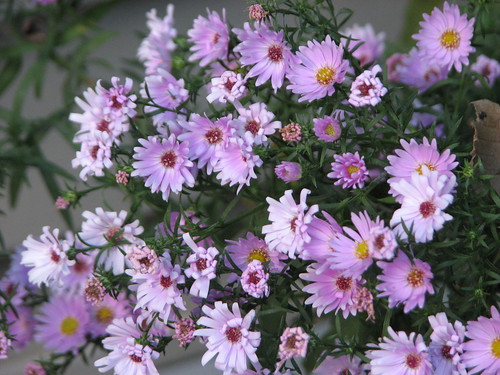
A pink NOID native whose tag is long lost...
IMG_7241
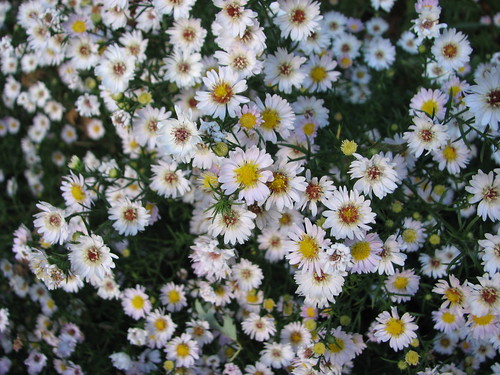
and a white one. Both from Prairie Nursery many years ago. Not shown is the S. ericoides, heath aster, which is already done for the season. :(
IMG_7236
And remember, greyhounds are an important part of any fall garden!
IMG_7267

Sunday, October 03, 2010

October: Nasturtiums: That's a wrap!

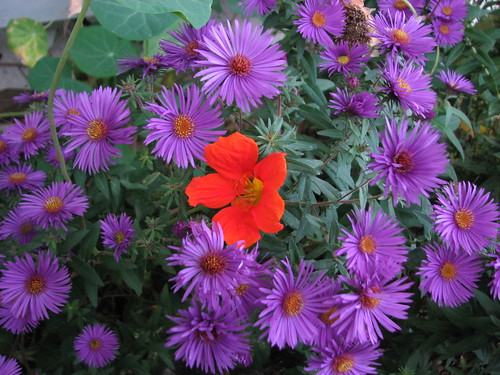
It's October in Chicago. The asters are blooming, the leaves are turning yellow, and the first frost is imminent. The cooler early fall weather has been a boon for the Spitfire nasturtiums, which rebounded from their bedraggled summer state and are still full and green. The nasties by the house filled in all around the purple aster that has just started to bloom. The purple and orange would make a striking color combo if only the nasties would produce more than two or three blooms at a time. Still, the contrasting foliage shapes look nice together. I like the idea of using nasturtiums as ground cover in the fronts of gardens and intend to try it again in the future.
IMG_7300
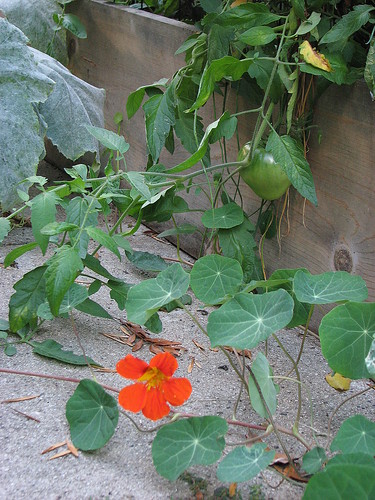
The nasturtiums by the alley fence didn't like being trained up the fence, but the vines on the ground did well in their shady spot. Still very few flowers, but the foliage softens the boundary between fence and ground and has a cute woodlandy look. You can still see the sad yellow vines that I had trained upwards.IMG_7243
What have I learned doing this project?
1) I can't comment on other nasturtium varieties, but at least the Spitfires do best on the ground. Planting them in a crowded spot and hoping they'll fill out up on a trellis does not work. Even draping the vines upward doesn't work, as the vines soon become spindly and yellow. Mine also didn't do great in containers; the leaves were smaller and the vines stayed short.
2) The Spitfires didn't flower as much as I was hoping, which is too bad because I love their color. I'd like to try other nasturtiums, perhaps yellow ones, that flower more reliably. However, nasturtium foliage is very cool and is worth the effort by itself.
3) Wintersowing is totally the way to start these babies. Direct sowing, for me, was a complete failure, and I have no patience for grow lights and hardening off.
4) The hottest part of the summer is rough but with enough water, the plants will pull through and look lovely in the cooler late summer and fall. My plants survived both in full sun and mostly shade.
IMG_7233
Special thanks to Mr. Brown Thumb and to Renee's Garden for putting this project together. I hope everyone had a good time and that the shared feedback has been useful! I've enjoyed seeing everyone's stories and hopefully we can do this again sometime. Cheers!

I'm growing Nasturtium 'Spitfire' for the GROW project. Thanks to Renee's Garden for the seeds.