Thursday, September 27, 2007

American basswood

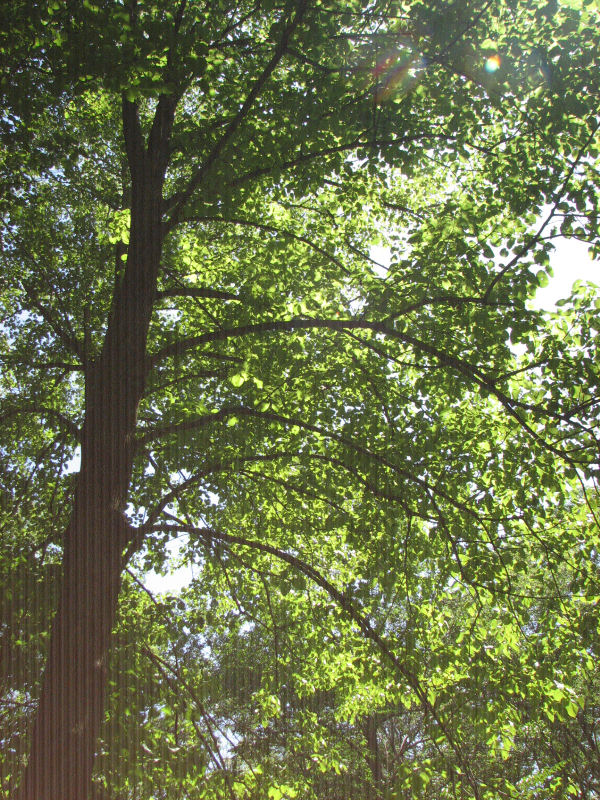
This tree isn't growing in my garden, unless you define my garden very broadly, but I wanted to post a picture so people can see what I study for a living. Tilia americana, the American basswood or linden, grows in mesic forests throughout the eastern half of North America. The range may or may not be further divided into multiple species, but in any classification scheme the northern populations are T. americana. Lucy Braun said that the Minnesota populations are the most "pure", untainted by introgression from other tilias. I don't know about that, but the trees in Minnesota forests were immense and beautiful.


Tilia americana, photo from Nerstrand-Big Woods State Park, Minnesota

My dissertation will focus on phylogeny and population genetics of the North American Tilia taxa. Past "splitty" taxonomists found upwards of 20 species, but recent treatments lump them all together as one. I hope that my molecular data will be the tiebreaker. The over-under is 3. Who's in?

Saturday, September 22, 2007

Asters

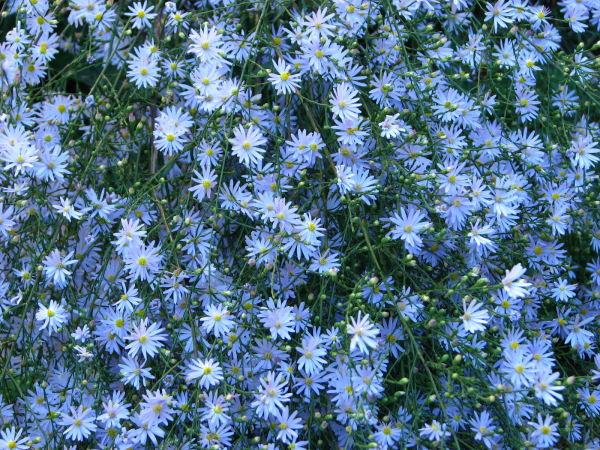
Borrowed from the bintlog: a picture I took today of Aster oolentangiensis, the sky-blue aster, in my garden.


Another native of Illinois, this prairie plant is a prodigious reseeder. I find new volunteers every year and relocate them to other parts of the garden. Like most of my plants, they are very tippy, and when they fall over onto the lawn or into the garden they look like drifts of pale blue snow. Next year I will try to remember to cut some of them back to see if I can make them more stocky.

Yes, the garden is still alive

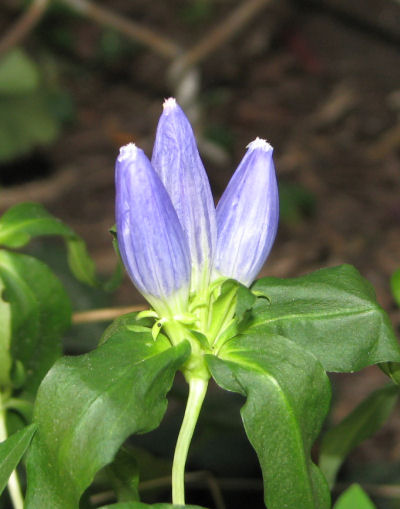
Wanted to share the first-ever blooms on my bottle gentian, Gentiana andrewsii, an Illinois native.


This is the second year I've had this plant in the ground. The flowers are interesting because the petals never fully open, and only a bumblebee is strong enough to push its way inside to the rich nectar reward. By coevolving this mutualistic relationship, the bumblebee benefits from reduced competition for tasty nectar, and the plant benefits by increasing its chance of pollination. How does this work? If a variety of non-specialist pollinators pollinated bottle gentian, the chances of each of those individuals also visiting another bottle gentian would be lower because they visit everything, but bumblebees learn that bottle gentian nectar is theirs for the taking and will actually seek out other individuals, bringing conspecific pollen along for the ride. This species, like many others, has thus improved its survival odds by tricking an animal into doing its bidding. That is just one reason why plants are so very cool. Their ways are subtle and deceptive, and they can dish out sumptuous rewards or instant death without all the awkward emotional or moral consequences.

Thursday, April 19, 2007

Spring, sort of

This is going to be a pretty uninvolved year for gardening. My preliminary exam is around midsummer, so before then I'm studying and after then I'm out in the field.

I've been watching the migrant birds and feeding them their tasty treats like the beneficent Seed Lady that I am. Have spotted in the back yard a yellow-shafted flicker (stayed for nearly a week, and was very cute pecking at the annoying April snow), chipping sparrows, a song sparrow, a brown thrasher (which flung mulch every which way for about an hour), and a blue and white parakeet. The collared doves are back and I think they're nesting in a spruce tree a couple of houses away. Their call is very distinctively dovey though markedly different from mourning dove or pigeon. I've also seen a collared dove single out a mourning dove and shoo it away from the feeder. Aggressive European birds = not a good thing. Mr. and Mrs. Cardinal are adorable when they feed each other, and the goldfinches have their breeding plumage back.

I apparently planted some things last fall because odd leaves are coming up all over the garden. Can't wait to find out what they are! My species tulips look lovely as always, but the daffodils are pretty sad. I don't know if they're underfertilized or if the unusual patterns of warm and cold this winter threw them off.

Need to go shopping for a tree for Jazzy soon.

Saturday, October 21, 2006

October

It's been a while since I posted. The summer was kind of rough and I didn't spend much time in the garden, but fortunately it's mostly filled with native perennials so it didn't mind. I went out today for one of the last times this season. It turned cold early this fall, and since it stayed cold late into June it was a pretty short growing season. The butterfly bushes were barely above my head, and the sunflowers I cut back never recovered their height. The dogwood hardly reaches the top of the fence. However, lots of nice flowers, even now...


Witch hazel


Mystery aster #1: white, roughly 3/4 inch flower heads. This is behind the indian grass against the fence, and I didn't know it was there until today. The dogwood and milkweed have interwoven to make a nearly impenetrable thicket back there. No wonder the rabbits love our yard despite the giant dogs!


Mystery aster #2: pink, flower heads over an inch across. I have several of these and they're still flowering vigorously. Mystery aster #3 (no pic), with tiny (1/4 to 1/3-inch) white flowers, I thought I'd identified as Aster ericoides, but the nursery where I bought it doesn't carry that so...hm. Maybe ptarmicoides? If I ever find my account number, maybe they can tell me my order history. Non-mystery asters, sky blue (Aster azureus) and big-leafed (A. macrophyllus), both did well this year and are done.

The next pictures were taken September 16:


Little bluestem grass


Prairie dock. I have dozens of flowers but they face the neighbor's yard! I was actually holding the stems and turning the faces towards me to get this picture.


Cranberry bush viburnum. As far as I've seen, nothing eats these berries, which seems like a terrible waste.


Downy sunflower. After I cut these back to keep them from flopping over, they flowered on stems about 16 inches tall. I think I need to strike a better balance next year - either cut back earlier, or not as hard.

Today I scatter-planted six hybrid asiatic lilies and five Allium 'Purple Sensation', put 25 dutch irises near the clematis pole, and planted one Rudbeckia fulgida 'Goldsturm' (between the ninebark and the butterfly bush; no marker). I have a couple more plants coming, supposedly. It's supposed to be in the 30s tomorrow so I don't see how I'm going to be motivated to plant them when they come. That's the problem with fall planting, especially bulbs. In the spring I kick myself for being such a wuss the previous fall, but faced with the reality of planting in the cold, I'd rather watch TV in sweatpants instead.